

If you live in the Tahoe Basin, black bears are part of everyday life. From paw prints near trash cans to daytime sightings in neighborhoods, these animals have adapted to living close to people. Understanding their behavior explains why they are so active around homes and why bear resistant trash can enclosures and bear-proof garbage cans have become a necessity in Lake Tahoe and Truckee.
Black bears are not predators in the sense that mountain lions or wolves are. They are opportunistic feeders, meaning they will always take the easiest, most calorie dense meal they can find. In the wild, this might mean berries, acorns, fish, or carrion. In Tahoe neighborhoods, it often means a tipped over trash can or a bag of leftovers in a garage. Once bears discover how rewarding human food can be, they quickly change their daily habits and spend more time in neighborhoods than in the forest.
When Black Bears Are Most Active
Black bears are naturally most active at dawn and dusk, but in Tahoe their habits have shifted. It’s now common to see them walking through neighborhoods in broad daylight. Human food has altered their natural patterns, making them less cautious and more comfortable near people. A bear that once would have avoided human activity will now stroll through a backyard at lunchtime if it knows there’s a chance of finding an easy meal.
Their activity also changes dramatically with the seasons:
- Spring: Bears emerge from hibernation hungry and looking for calories. Months of fasting leave them desperate to find food, and trash cans often become the first stop.
- Summer: Vacation season brings more garbage and food waste, creating opportunities around homes and rental properties. A single weekend party or an unsecured bin can teach a bear that a neighborhood is worth visiting.
- Fall: During hyperphagia, bears eat as much as possible—up to 20,000 calories per day—to prepare for hibernation. This is the peak time for encounters, as bears work tirelessly to pack on fat before winter.
- Winter: In deep snow years, most Tahoe bears den and rest. But during lighter winters, some remain partially active, wandering neighborhoods for scraps. This is another sign of how human food has reshaped their survival strategies.
Why Bears Target Homes
Bears are not interested in people; they are interested in food. Household trash, pet food, bird seed, and even scented food wrappers are powerful attractants. A single fast food bag in the back of a car can be enough to draw one in. Their sense of smell is seven times stronger than a bloodhound’s, so they can detect a food source from well over a mile away.
Once a bear finds food at a home, it will return again and again. With each return visit, it becomes bolder, testing doors, climbing decks, and breaking into garages. What begins as a nuisance can quickly escalate into significant property damage. Worse still, this behavior puts the bear at risk. Wildlife officials call them “problem bears,” but the reality is that people created the problem by making food too easy to access.
Why Bear Resistant Trash Enclosures Matter
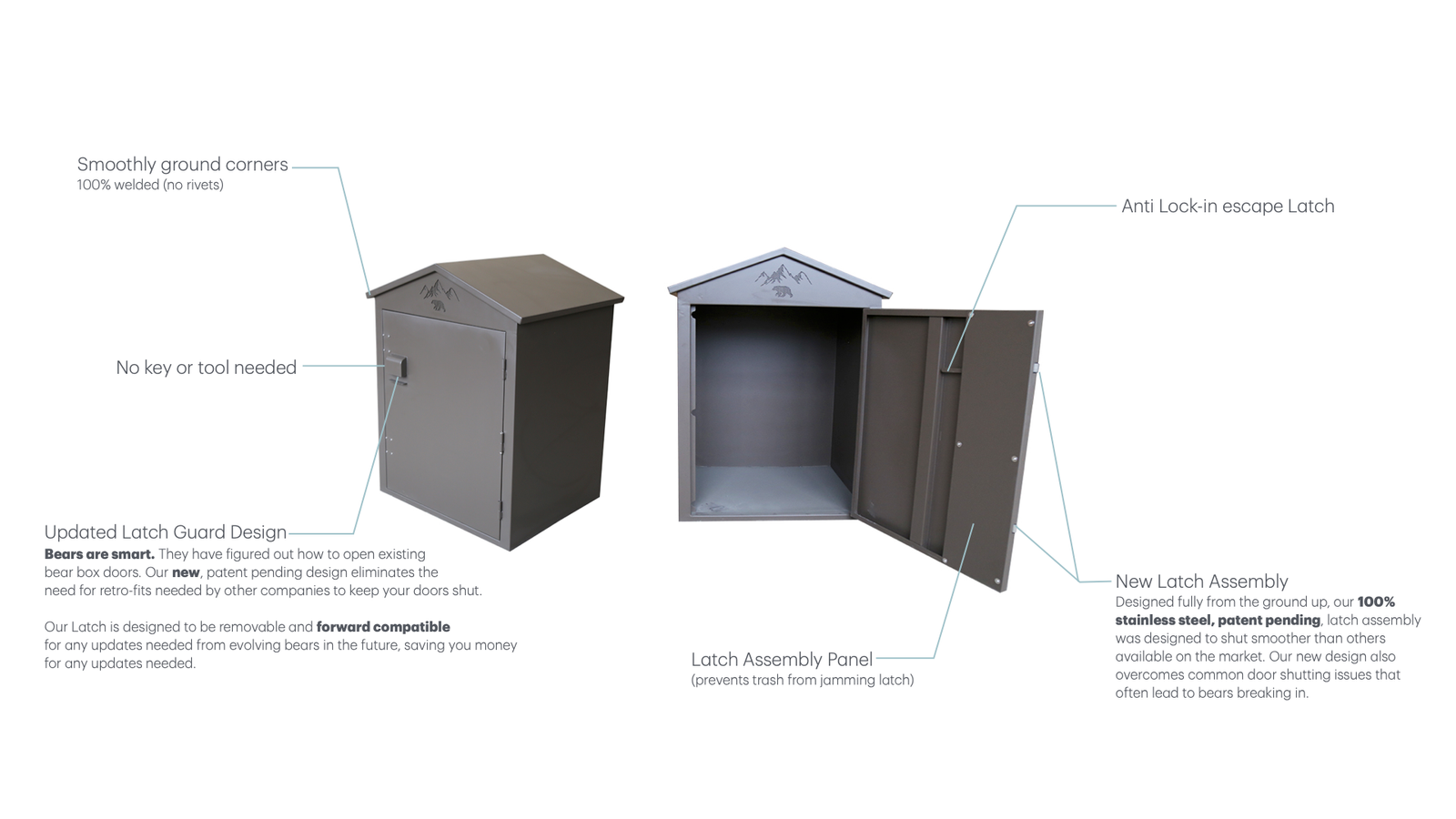
The single most effective way to reduce bear visits is to secure garbage. Standard trash cans cannot withstand a bear’s strength or persistence. They can tip them over, crush them with their weight, or pry the lids open in seconds. A properly designed bear resistant garbage bin or wildlife resistant trash container is built from heavy gauge steel, has reinforced doors, and includes a latch system that bears cannot manipulate.
By keeping trash locked away until pickup day, these enclosures remove the reward that keeps bears coming back. Over time, the bear learns that a particular neighborhood no longer provides food and shifts its activity back toward natural sources. Communities that adopt bear resistant containers consistently report fewer break-ins and less bear activity around homes. This is why many Tahoe Basin counties and HOAs now require these enclosures as part of living in bear country.
Final Thoughts
Tahoe’s black bears are remarkable animals. They can climb trees, swim across cold lakes, and survive harsh winters, but their habits are changing due to easy access to human food. More frequent daytime activity and neighborhood visits are a direct sign of this shift. While many people enjoy seeing bears, close contact almost always ends badly for the bear in the long run.
The good news is that the solution is simple: secure your trash. Bear resistant containers protect your property, your neighbors, and the bears themselves. When communities commit to using them, bears quickly relearn to avoid people and return to their natural feeding grounds.
Living in the Tahoe Basin comes with responsibilities as well as rewards. By taking small steps from locking up garbage to removing bird feeders and storing pet food indoors, residents can help ensure that Tahoe remains a place where both people and wildlife thrive. A fed bear is a dead bear, but a community that works together to secure food sources can keep these incredible animals wild for generations to come.
FAQ
Black bears are opportunistic and seek easy, high-calorie food; unsecured trash, pet food, and bird seed encourage daytime neighborhood visits and repeat behavior once a food reward is found.
Secure all household waste in a bear resistant trash can enclosure or approved bear proof system, store bins indoors until pickup, and remove attractants like bird feeders and outdoor pet food.
Encounters peak in fall during hyperphagia as bears eat up to 20,000 calories daily, but spring trash access and busy summer rentals also drive frequent neighborhood activity.
Properly designed, reinforced containers with latches that bears can’t manipulate prevent access, remove rewards, and help shift bears back to natural food sources over time.
Adopt mandatory wildlife resistant trash container standards, enforce pickup-day-only setouts, educate residents, and coordinate with HOAs and local authorities on consistent trash security.